The Odyssey Filming Locations: a cinematic tour in the Aeolian Islands

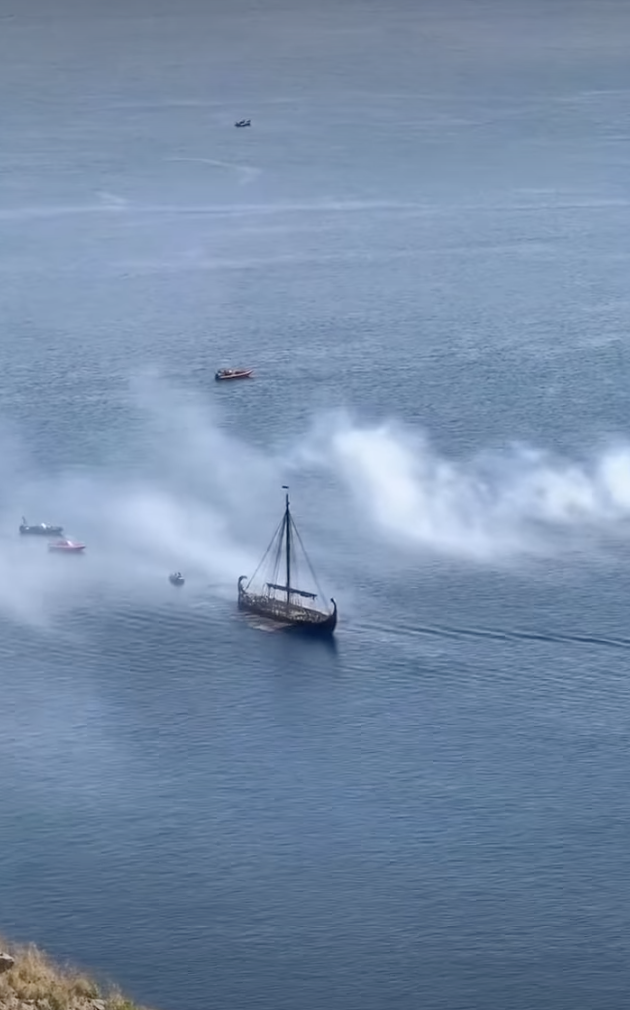
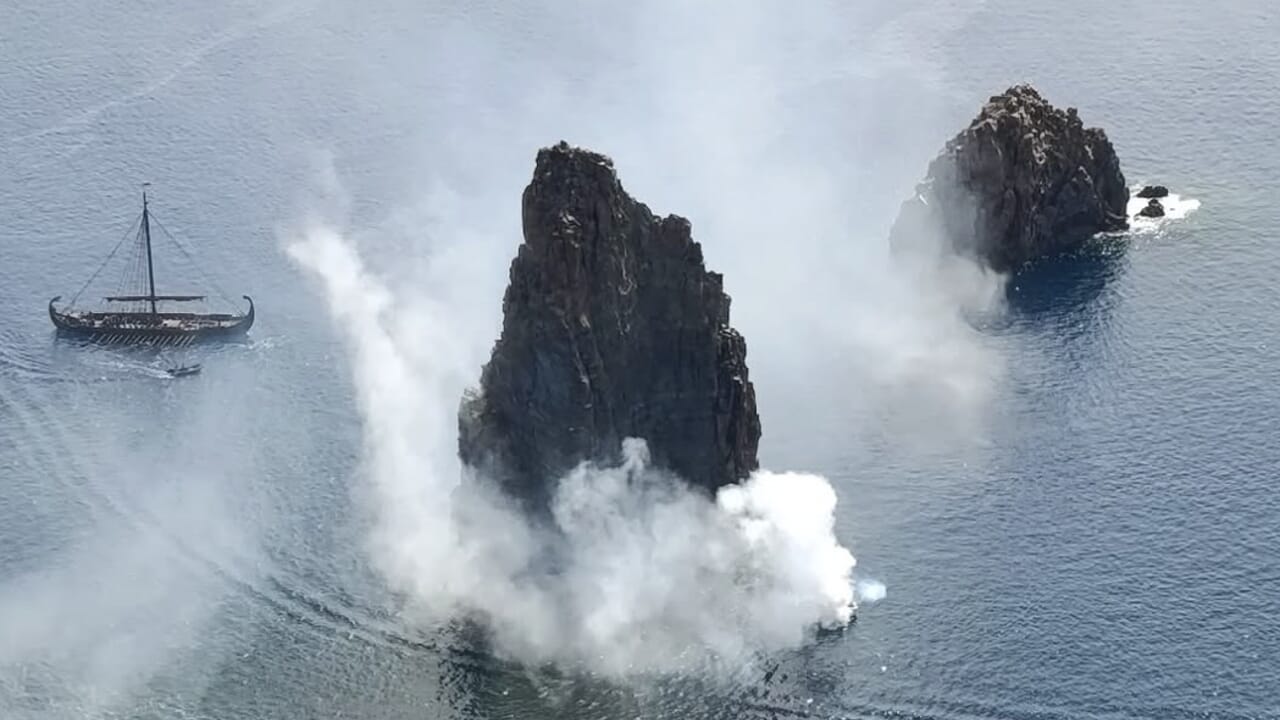
Last spring, something funny happened out on the water near Lipari. A ship appeared. Not a ferry, not a fishing boat, not one of the hydrofoils that travel between the islands every hour.

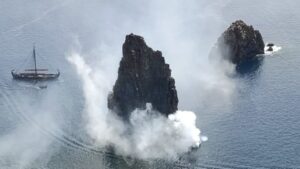
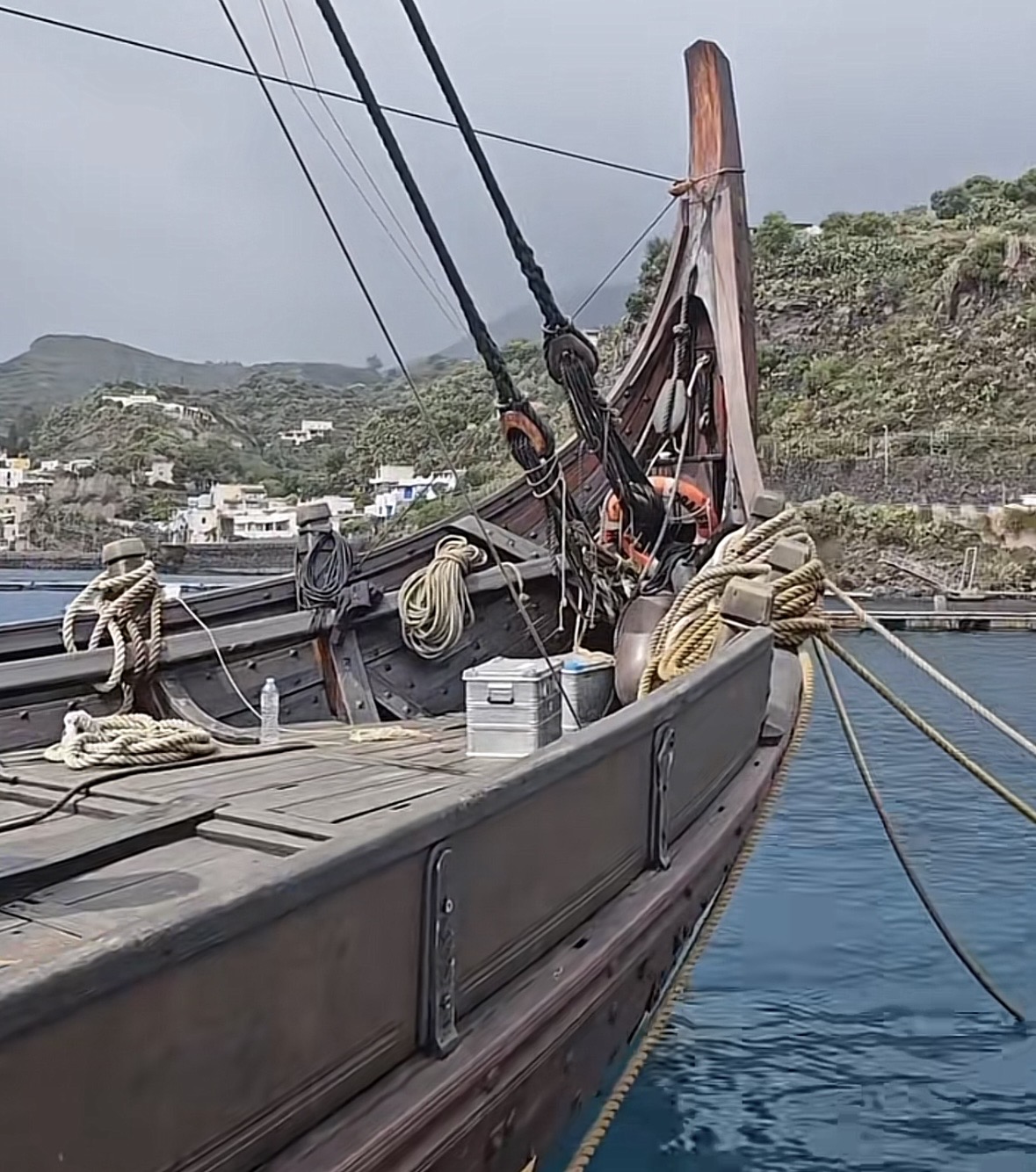
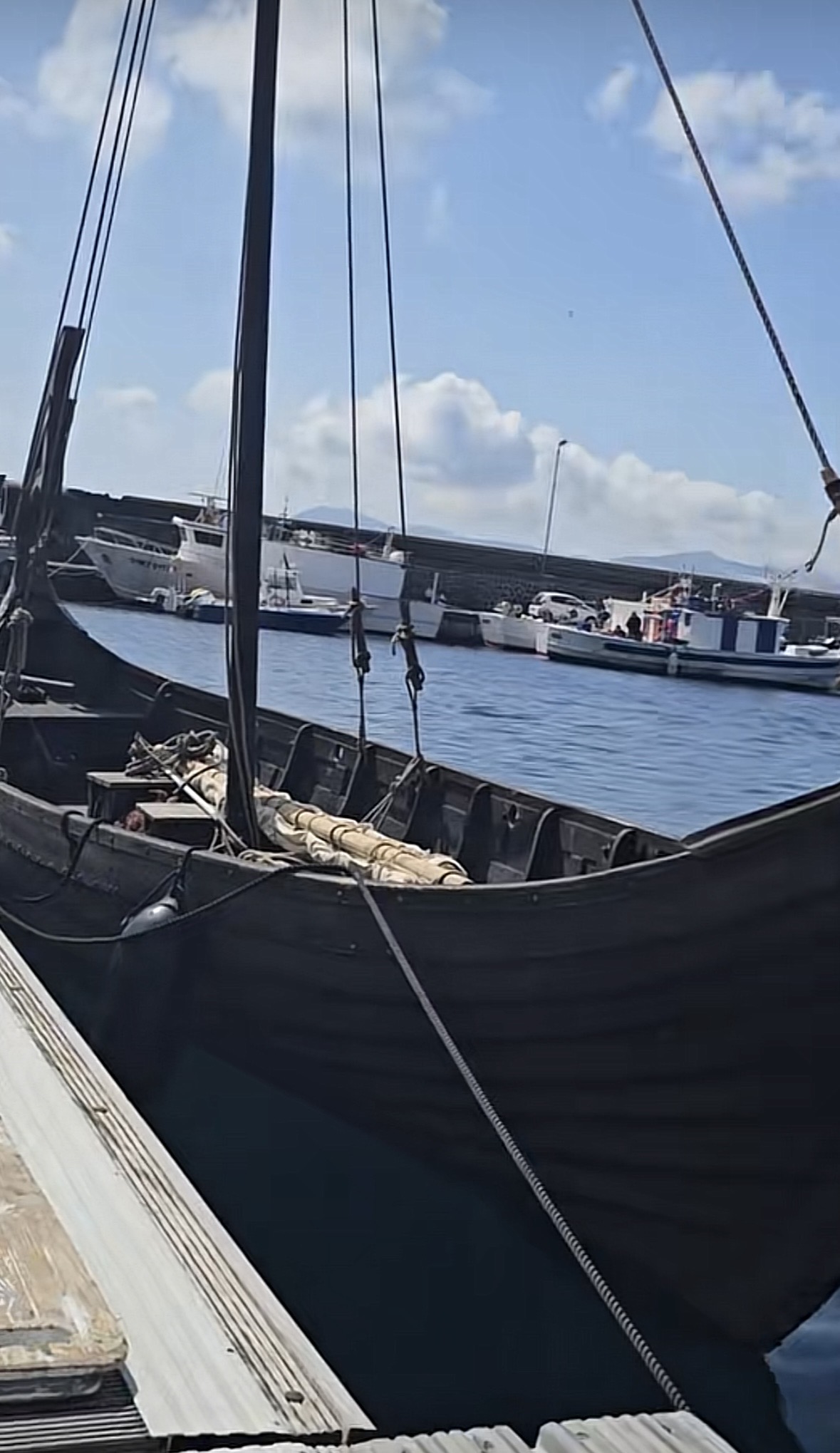
This was something else entirely: a Viking longship, 35 metres long, with big square sails and old wooden floors. On deck, actors in ancient costume. On the water around it, a flotilla of production carrying cameras the size of washing machines. And somewhere in the middle of all of it: Christopher Nolan, the director of Inception, Interstellar, and Oppenheimer, shooting what may be one of the most ambitious films of his career.

The Odyssey, Nolan’s adaptation of Homer’s 3,000-year-old journey home, will release in cinemas worldwide on July 17, 2026. And for several weeks in spring 2025, these islands that I write about every day became one of its primary stages. CRAZY, huh?

In this article

I’ve been coming to the Aeolian Islands for years. So when Nolan’s production arrived here, not in Rome, not on the Amalfi Coast, not in the obvious, postcard-ready corners of Italy, it felt like an open confirmation of something I already knew: that these islands carry a kind of power that most people haven’t discovered yet.

So, today I will try to guide you to where The Odyssey was filmed in the Aeolian Islands, how you can visit every one of these locations yourself, and, if you’re a fan of mythology as I am, tell you a bit more about the ancient myths that tie these islands to the story of Odysseus.


Why Christopher Nolan Chose the Aeolian Islands

Nolan is not a director who uses green screens when he can use the real thing. Oppenheimer was filmed almost entirely on location in New Mexico. Interstellar was shot on real glaciers in Iceland and real cornfields in Canada. The approach with The Odyssey was the same: find the places that actually match the world of Homer’s poem, and put the cameras there.

But, I think there’s a deeper reason Nolan ended up here, and it goes far beyond aesthetics. According to legend, Lipari is the island where Odysseus rested as a guest of King Aeolus (Eolo), keeper of the winds. The very name “Aeolian Islands”, Isole Eolie in Italian, comes directly from that story. Nolan didn’t choose a backdrop that evoked the ancient Mediterranean. He chose the actual place that Homer had in mind when he wrote the scene.

He also made a deliberate visual choice. The Aeolian Islands and the Egadian Islands (where he filmed the Favignana sequences) are dramatically different from each other: the Egadians are clear, flat-watered, serene; the Aeolians are volcanic, jagged, elemental. By using both, the production ensured that no two “islands” in Odysseus’s journey would look the same. Each episode of the poem gets its own landscape, its own mood.


Aeolus, the Mythology of the Wind-Keeper

To understand why the Aeolian Islands matter to The Odyssey, you need to understand who Aeolus was. In Homer’s poem, Aeolus is the keeper of the winds, not a god exactly, but a mortal beloved of the gods, entrusted with mastery over every wind that blows across the world. He lives on a floating island, Aeolia, always feasting and celebrating.

When Odysseus arrives, exhausted and longing for Ithaca after the long years of the Trojan War, Aeolus welcomes him for a full month. He listens to the whole story of the war. Then, as a parting gift, he gives Odysseus something extraordinary: a bag made of ox-hide, stitched tight, containing every “bad” wind that would blow his ship off course. With the bag sealed and only the west wind blowing free, Odysseus would have a clear run home to Ithaca.

But you know the saying, curiosity kills the cat? Well, when Odysseus fell asleep, Ithaca almost in view, his crew, curious and suspicious, decided the bag must contain treasure that their captain was planning to keep for himself. And they opened it.

Every wind Aeolus had trapped erupted at once. The fleet was blown back to sea, further from home than when they’d started. When a mortified Odysseus returned to Aeolia and begged for help a second time, Aeolus turned him away. He had wasted the gift. The winds would not be given twice. It is one of the cruelest moments in the poem, not a monster, not a god’s wrath, just human weakness and exhaustion, a few minutes of bad judgment on a calm evening, and everything is lost.

These islands carry that story in their name. The Aeolian archipelago has been volcanic and wind-shaped since before human memory. Two of the seven islands are still active volcanoes today. Archaeological evidence, Mycenaean pottery recovered from the islands, confirms genuine ancient Greek contact with this place.

When you stand on the coast of Lipari and feel the wind shift, coming from a different quarter with no obvious reason, there’s a moment where the mythology stops feeling like mythology and starts feeling like a description of something real. I guess this is exactly what Nolan needed for these scenes.


The Islands: Where Exactly Was The Odyssey Filmed?

Filming in the Aeolian Islands took place in April, with the production using Lipari, Vulcano, and Basiluzzo as its primary locations. These scenes depicted the mythological island of Aeolia, the sequences involving Odysseus, the winds, and the floating kingdom of Aeolus. Additional shooting took place at Pietra del Bagno, a protected coastal formation near Lipari.

Here’s what you need to know about each location:


Lipari

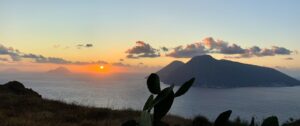
Lipari is the heart of the archipelago, the largest island, the most populated, the one with the most history packed into its few square kilometres.

It has been inhabited for at least 6,000 years. The Greeks settled here, the Romans after them, the Normans, the Spanish, each civilization leaving something behind in the stone. The Archaeological Museum, housed inside the citadel walls, makes the island’s ancient connections explicit: pottery, masks, theatrical figurines, all recovered from the surrounding seabed and hillsides.

For The Odyssey, Lipari served as the central staging ground for the Aeolian Islands sequence. The dramatic rocky coastline, mostly cliff-edged, gave Nolan exactly the kind of primitive, undomesticated landscape that Aeolia demands.

As a visitor, Lipari is also your natural base for exploring the other islands. The ferries and hydrofoils radiate outward from here, and the town itself rewards an evening walk, the corso after dinner, a glass of Malvasia on a terrace, the lights of the boats in the harbor below.


How to Experience Lipari Like a Local


Rent a scooter

The best moments on Lipari often happen away from the main town. A scooter gives you freedom to stop at viewpoints, tiny beaches and quiet roads whenever you want.

Take a boat tour at sunset

Even if you normally avoid organized tours, do this at least once, possibly with a small boat. Seeing Lipari from the sea changes your perspective completely.

Visit outside peak August

July and September are ideal. The island still feels alive, but you can actually enjoy its quieter atmosphere.

Stay for at least a few nights

Many visitors rush through Lipari too quickly. The island becomes more beautiful once you slow down and adapt to its pace.
 

Vulcano

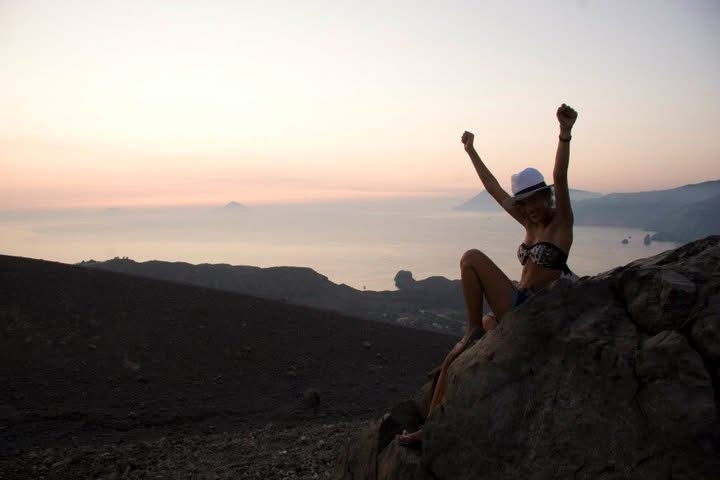
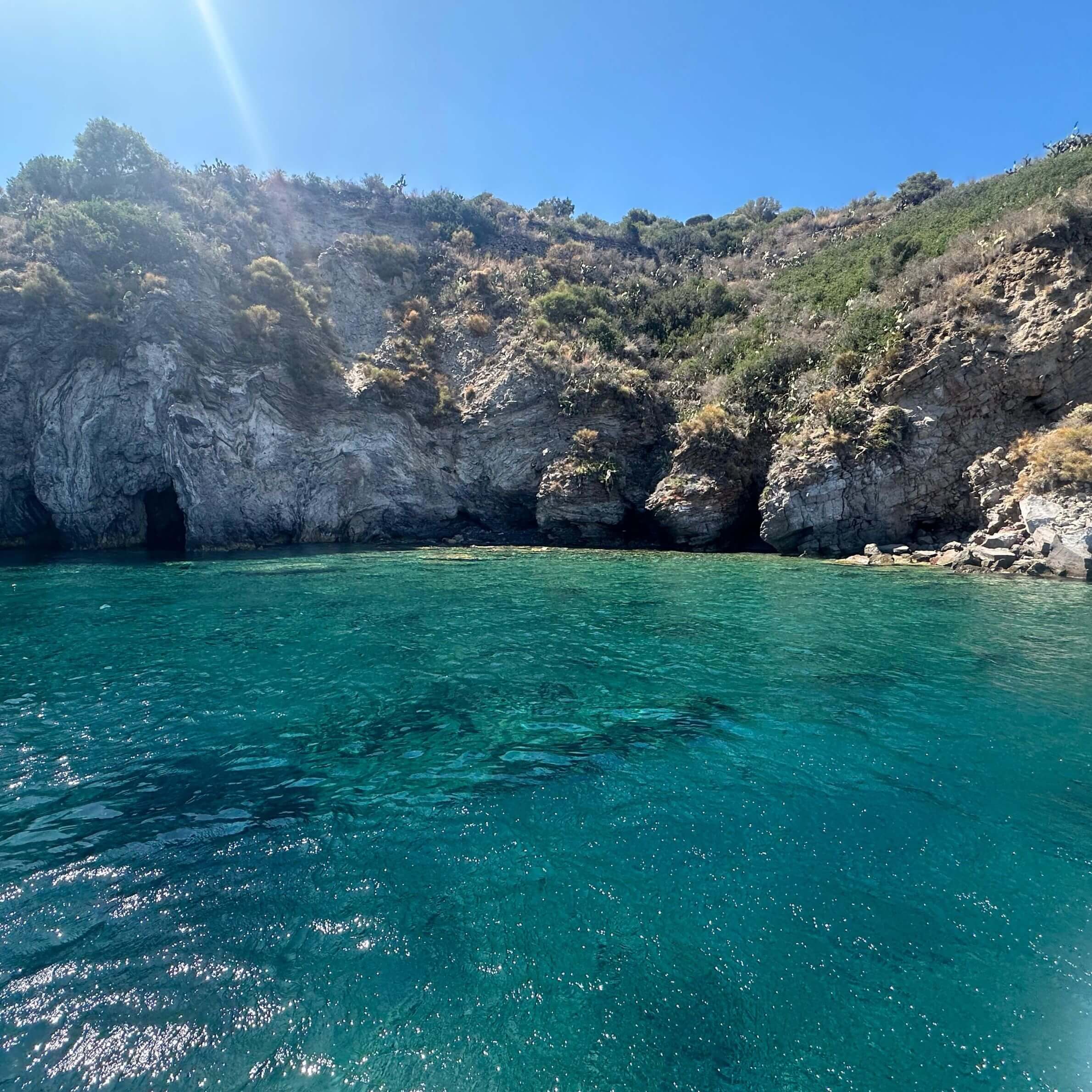
Vulcano is the island that announces itself before you arrive. On calm days, you can smell the sulphur from the boat. The Gran Cratere, Vulcano’s main volcano, rises to 391 metres and can be hiked to the rim in about an hour. The views from the top are great.

The island also has its famous mud pools, i Fanghi, where you can soak in warm sulphurous water that allegedly does extraordinary things for your skin, and which definitely does extraordinary things to the smell of whatever you’re wearing (please remember that before wearing your nice dress ahah!).

Cinematically, Vulcano offers something that no other island in the chain can: active volcanic drama. The smoking crater, the yellow fumaroles, the black volcanic sand… it’s a landscape that looks actually alien and ancient, but also dangerous. For scenes meant to evoke a world where gods interfere with mortal lives and the natural world has a will of its own, Vulcano is irreplaceable. It’s also a 20-minute ferry ride from Lipari, making it the easiest day trip from your base on the main island.


Things to Do in Vulcano


Hike the crater

Still one of the most unforgettable experiences in the Aeolian Islands.

Explore the coastline by boat

Some of Vulcano’s best scenery is only visible from the sea.

Visit during shoulder season

Spring and early autumn bring softer light, cooler temperatures, and fewer crowds.


Basiluzzo

Basiluzzo is different from all of them. It is not an island; it’s a small, uninhabited islet, not much more than a rocky plateau rising from the sea between Panarea and Stromboli. There are no ferries to Basiluzzo. There is no port, no village, no café. What there is: a sheer volcanic coastline, Roman ruins visible above the waterline, an extraordinary cobalt-coloured sea, and Stromboli erupting on the horizon.

Because of its environmental sensitivity, filming on Basiluzzo and at the nearby Pietra del Bagno required special permission from the Region of Sicily. You can’t land on Basiluzzo as a private visitor, but you can see it. If you get a private boat tour with swimming stops, they will most commonly stop there to let you dive near the stone.


Pietra del Bagno

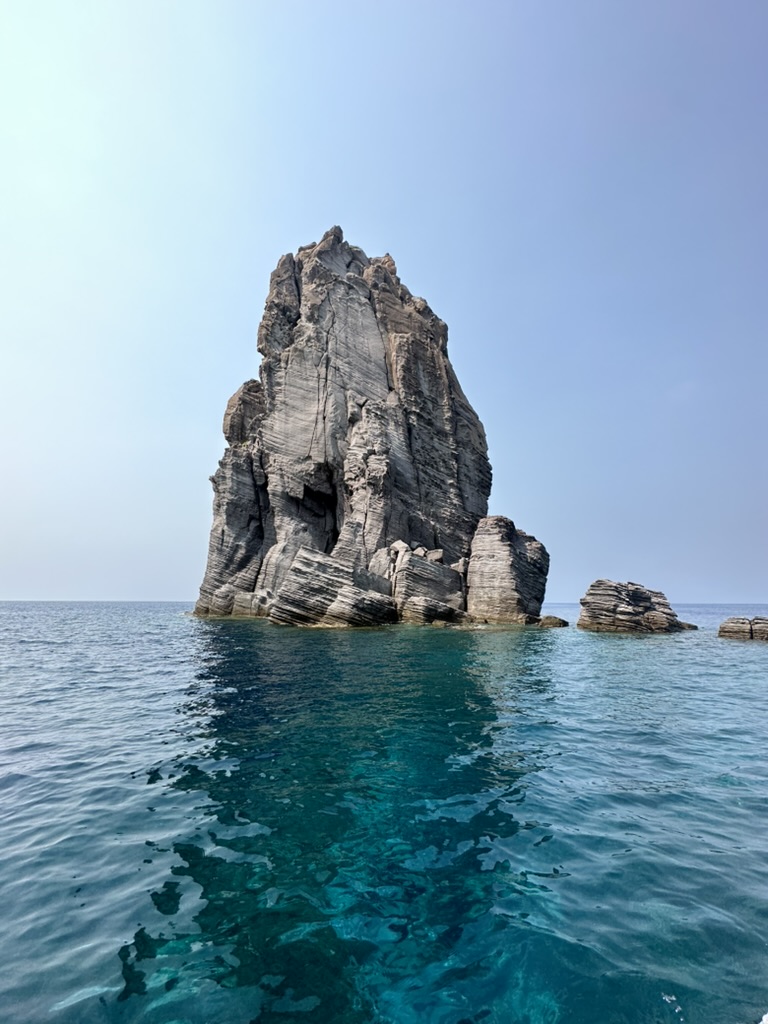
A short distance from Lipari town, Pietra del Bagno is a fairytale-like rock formation rising directly from the sea, a set of volcanic stone that looks like it was placed there by someone who wanted to mark something.

For the film, it’s been suggested as the likely backdrop for the Aeolus wind-bag sequence, the moment of calm before Odysseus’s crew opens the bag and loses everything. There’s a logic to it: the formation has a theatrical aspect, an edge-of-the-world feel.

Accessible from Lipari, it’s worth including in any itinerary if you want to see the full picture of where this production worked.

How to Visit the Filming Locations


The good news: almost all of these locations are accessible to independent travellers, and the Aeolian Islands are more rewarding to visit than any film location guide can capture.

Getting there. The gateway is Milazzo, on Sicily’s northern coast. From Milazzo, hydrofoils (aliscafi) and ferries run to Lipari year-round. The hydrofoil takes about 55 minutes and runs multiple times daily; the ferry takes longer but costs less. In summer, services increase way more often.

Your base. Stay on Lipari. It has the widest range of accommodation, the best transport connections to the other islands, and enough character to be worth several evenings on its own. The town has a good selection of hotels and B&Bs from budget to boutique; book early if you’re coming in July or August.

Vulcano. One full night or a day trip from Lipari. The first ferry in the morning and the last one back in the evening gives you plenty of time to hike the crater, visit the mud pools, and swim off the black sand beach. Wear shoes you don’t mind ruining on sulphur paths.

Basiluzzo. You won’t land here, but you can see it properly. Book a boat excursion from Panarea (the closest inhabited island) or from Lipari. Many half-day and full-day boat tours of the Panarea-Stromboli area pass Basiluzzo closely enough to appreciate it. Ask specifically for tours that include the islet if it matters to you.

Pietra del Bagno. Reachable from Lipari town on a short walk or a local boat trip. Ask at the port; the local boat operators know every rock and formation around the island.

Timing. Late May through June is the sweet spot: warm enough to swim, quiet enough to breathe. July and August are peak season, the islands fill up, prices rise, the ferries get crowded. September is a worthy alternative, with warm water, thinner crowds, and a certain end-of-summer melancholy.


Suggested Odyssey-Inspired Itinerary


Day 1: Lipari

Explore the old town, take a coastal drive and finish with a sunset boat tour.

Day 2: Vulcano

Hike the crater early before the heat becomes intense, then bagni di fango and relax near the water afterward.

Day 3: Panarea & Basiluzzo

Take a boat excursion around the smaller islands and spend the day on the sea. Honestly, this is one of the best ways to experience the Aeolian Islands in general.


The Aeolian Islands Before the World Fully Discovers Them


Film tourism changes places. We’ve seen it happen everywhere. After The White Lotus, parts of Sicily exploded in popularity almost overnight. Restaurants became harder to book, hotels became more expensive, and places that once felt relatively local suddenly appeared constantly on Instagram and TikTok.

Something similar could easily happen with the Aeolian Islands after The Odyssey releases. And to be fair, the islands deserve recognition. They are extraordinary. But part of me also hopes they keep some of their quietness. Because what makes the Aeolian Islands special is not luxury or trends. It is the feeling they give you, the sense of peace and distance from mainland life.

Christopher Nolan may introduce millions of people to these islands, but the magic was already here long before the cameras arrived 🙂 

Frequently Asked Questions

When does The Odyssey release?

July 17, 2026, worldwide in cinemas. It is Nolan’s first film shot entirely on IMAX 70mm cameras.

Matt Damon plays Odysseus. The cast also includes Tom Holland, Zendaya, Anne Hathaway, Robert Pattinson, Lupita Nyong’o, and Charlize Theron, among others.

Lipari, Vulcano, and the coastal areas around Pietra del Bagno are fully accessible. Basiluzzo is a protected uninhabited islet, you cannot land there independently, but boat tours pass closely.

No. Nolan also filmed extensively on Favignana in the Egadian Islands (near Trapani, Sicily). The Italian sequences together represent a significant portion of the film.