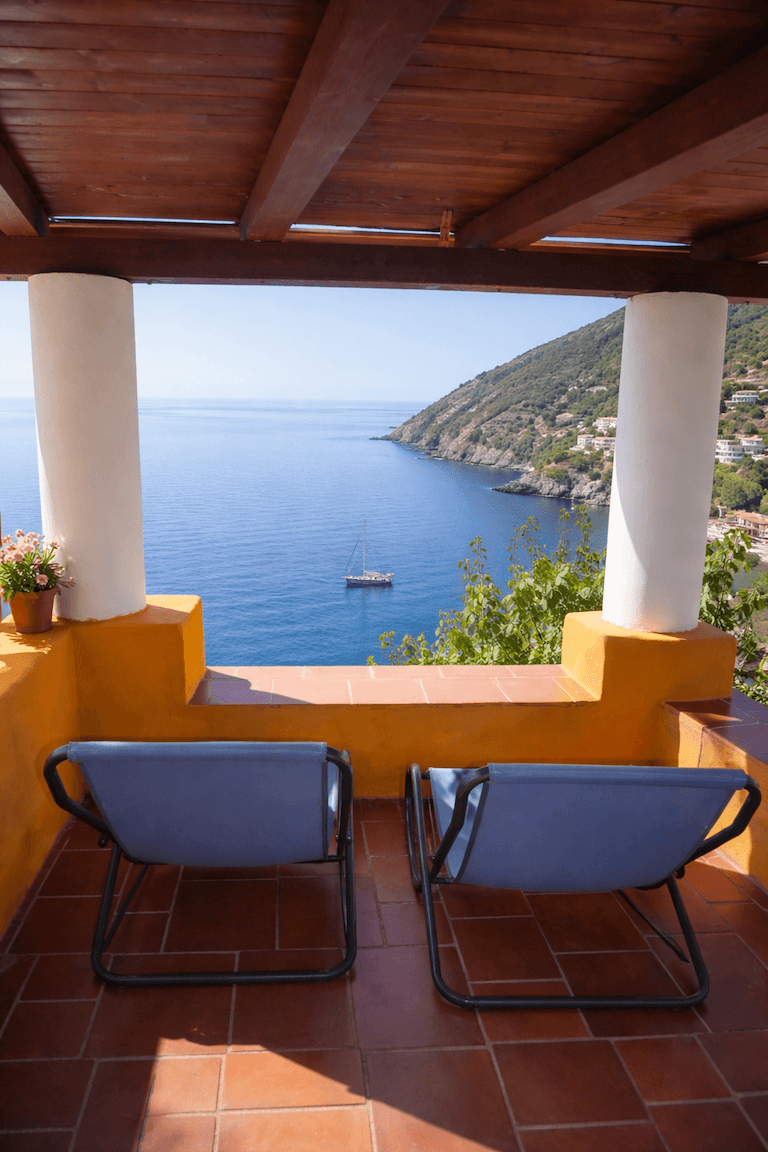
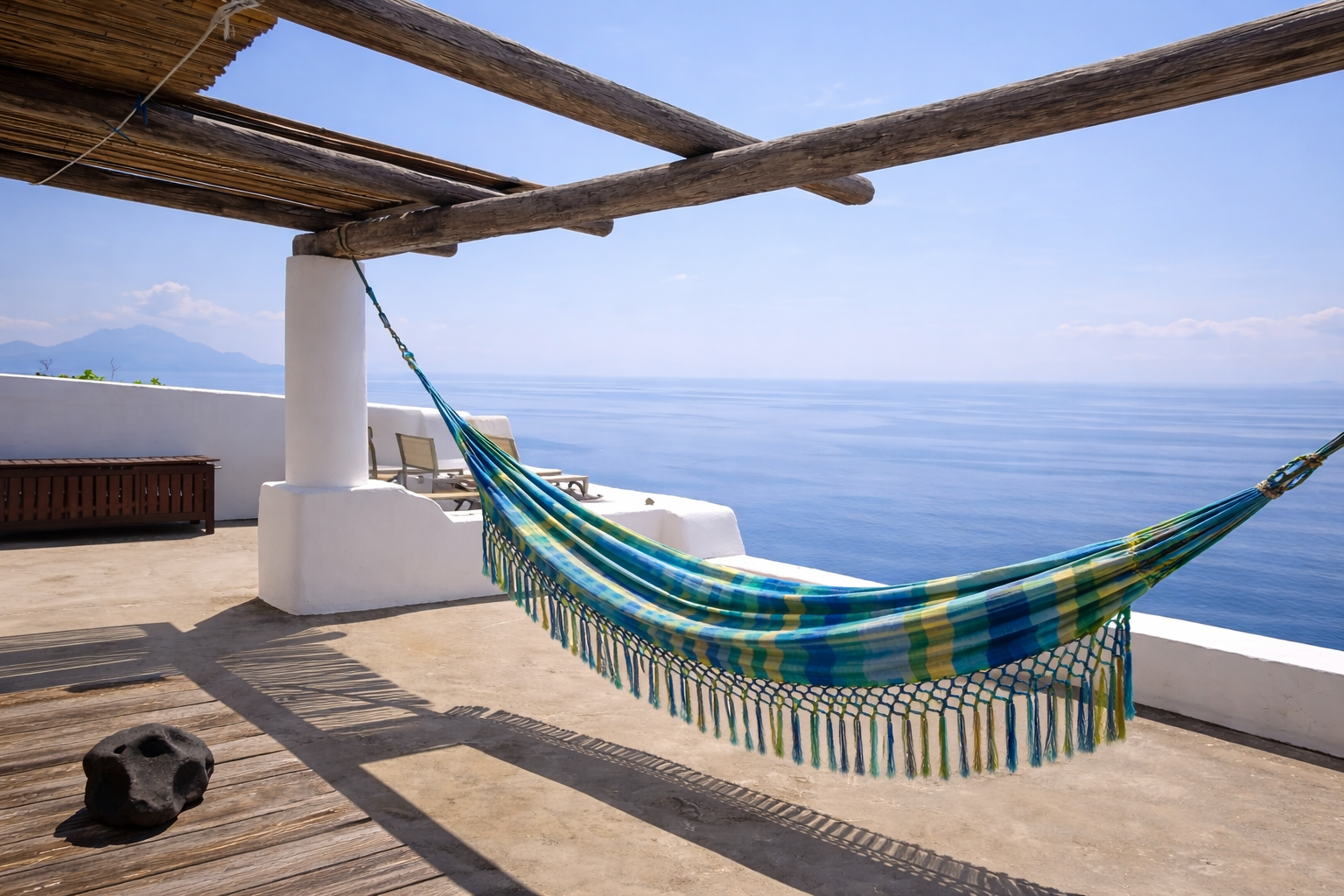
This is it, you made it: Alicudi is the last stop. The westernmost island of the archipelago. And it feels like it.
This is not an island that tries to welcome you with comfort. It doesn’t soften itself for visitors. Instead, it asks a simple question: are you willing to adapt? If the answer is yes, Alicudi offers something rare, a place where time stretches, effort matters, and days are shaped more by light and movement than by plans.
In this article
Where Alicudi sits in the Aeolian Islands
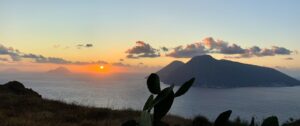
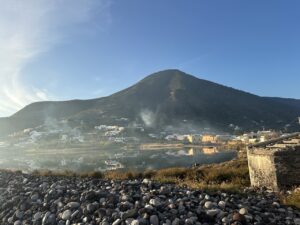
Formed by an extinct volcano, the island rises sharply from the sea, its slopes too steep for roads. Because of its position, Alicudi is more exposed to weather than the islands to the east. Sea conditions influence ferry schedules more here. Locals are used to this. Visitors need to learn this.
Alicudi Porto: First impressions
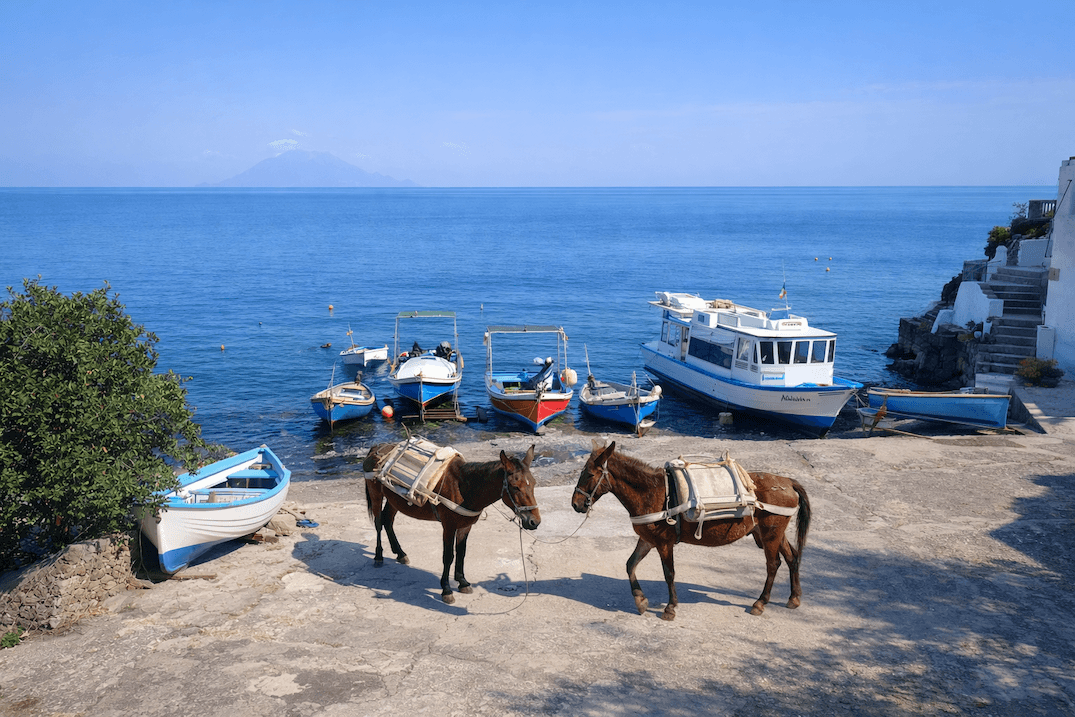
Alicudi Porto is the island’s only point of arrival at sea level, and it already tells you almost everything you need to know. As the ferry pulls in, you see houses built into the slope, dark volcanic sand, fishermen repairing their nets, and donkeys waiting quietly to carry supplies uphill.
There is not much else, really. Just a small, functional stretch by the sea.
Here you’ll find the island’s shared services: a bar, a small grocery shop, a hotel, the post office which opens only a couple of days a week, and the power station.
Just above the port stands the Church of the Carmine, its bell tower marking the quiet transition from sea level to the steep paths beyond. From here on, Alicudi moves upward.
Moving around: stairs, walking, and donkeys
There are no roads on Alicudi. No cars, no scooters, no shortcuts. Movement happens on foot. These paths are the island’s infrastructure.
The donkeys are an essential part of this system. They are working animals, not attractions, carrying groceries, building materials, luggage, and anything else that needs to move uphill. When you meet one on the stairs, you step aside and wait. They have the right of way.
Walking reshapes your sense of distance. What looks close on a map often feels far once elevation is added. Over time, your pace slows, your movements become deliberate, and effort becomes part of the experience rather than an inconvenience.
Daily life and rhythm
Life on Alicudi follows a simple pattern.
Mornings are quiet and cool, often the best time for walking or swimming. Midday brings heat and stillness. Afternoons stretch without urgency. Evenings arrive gently, shaped by darkness rather than activity.
Services are limited, and planning ahead becomes instinctive. You shop when the shop is open, eat what’s available and move with it rather than expect.
At first, this can feel restrictive. Then, for many people, it becomes grounding.
The sea around Alicudi
Alicudi has no beaches in the conventional sense. Swimming happens from rocks, ladders, and small access points along the coast.
The water deepens quickly, clear and cool. Swimming here is not something you schedule, it’s something you return to throughout the day. A pause after climbing. A reset in the heat.
Sea conditions change, and confidence in the water matters. There are no lifeguarded areas, no shallow entries. What Alicudi offers instead is space, quiet, and a direct connection with the sea.
Food, supplies, and eating simply
Food on Alicudi reflects availability rather than variety.
The small grocery shop carries essentials. Eating out is possible, but informal, with short menus shaped by season and supply. Fish appears when the sea allows it.
Meals are unhurried. Many visitors find that without distraction, food feels more intentional, even when it’s simple. Those staying longer often cook for themselves, adjusting meals to what the island provides.
Where to stay on Alicudi
Accommodation on Alicudi is limited, and location matters.
Staying near the port means easier access to services and fewer daily climbs. Staying higher up offers more silence and views, but comes with physical effort, especially when carrying luggage.
There is no right choice, only different rhythms. Packing light makes everything easier.
Who Alicudi is for (and viceversa)
Alicudi suits travelers who are comfortable with limits.
It works well for walkers, slow travelers, and anyone seeking stillness. It may not suit travelers who need nightlife, constant choice, or easy mobility.
This isn’t a judgment, just a reality. Alicudi doesn’t try to be everything.
Does Alicudi fit into a longer Aeolian trip?
Alicudi often works best later in a journey, after you’ve adjusted to island life elsewhere. Many people pair it with Filicudi, which offers a slightly softer rhythm and more variety.
Two or three nights are usually enough to settle into the pace, though some people stay longer than planned.
When to visit Alicudi
Late spring and early autumn offer the best balance of weather and ferry reliability. Summer brings heat but little crowding. Winter is very quiet, and limited.
Practical tips before you go
Pack light, bring cash, wear good walking shoes, and allow buffer days for ferries. Accept limited connectivity and limited choice. These small adjustments make a big difference. Check this section for more.
FAQs about Alicudi
Is Alicudi worth visiting?
Yes, if you value quiet, walking, and simplicity.
How many days should I stay on Alicudi?
Two to three nights is ideal for most people.
Are there cars or scooters on Alicudi?
No. All movement is on foot.
Is Alicudi suitable for children?
Only for families comfortable with walking, stairs, and limited services.