Alicudi and Filicudi are the two most remote islands in the Aeolian archipelago. Far from crowds and schedules, life here moves slowly. This guide is written for those of us who are curious about what lies beyond the main routes, and those who are willing to trade convenience for a simpler, more grounded way of experiencing the islands.
In this article
There is a moment, somewhere after Lipari and Salina, when the Aeolian Islands begin to thin out. The ferries grow quieter. The deck empties. Conversations soften. You can feel it before you see it, a sense that something is changing.
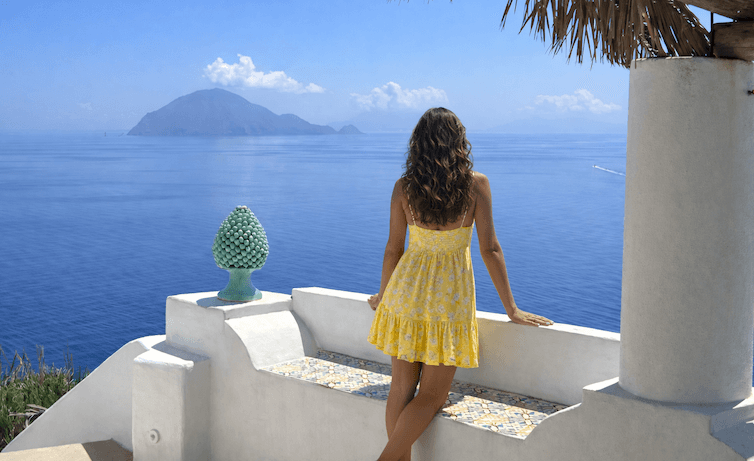
Alicudi and Filicudi sit at the western edge of the archipelago, the last two islands before the open sea takes over completely. They are often described as “remote,” but that word doesn’t quite capture what makes them different. These islands are not simply far away, they are self-contained. Life here follows its own logic, its own pace, and its own limits.
People don’t come to Alicudi or Filicudi by accident. Or rather, they might arrive without knowing exactly why they chose them, but they rarely end up here by following a checklist. These are not islands of highlights and must-sees. They are places of long afternoons, steep walks, quiet swims, and evenings that end early because darkness feels complete.
There is no nightlife to speak of, no shopping streets, no carefully curated version of island life. What you find instead is space. Space to walk, to think and to notice small things again, like the sound of footsteps on stone, or the way the sea changes color as the sun drops lower.
If you are looking for variety, convenience, or entertainment, the Aeolian Islands offer many other beautiful options. But if you are curious about what happens when travel slows down completely, when the landscape sets the terms and you adjust accordingly, you will definitely fall in love with Alicudi and Filicudi.
Why Alicudi and Filicudi belong together
Alicudi and Filicudi are often paired together, and not just because ferry routes make it convenient. Geographically, they sit close to one another. Practically, they share the same sense of separation from the busier islands, but they offer slightly different experiences.
Alicudi is the more extreme of the two. Steeper, quieter, wilder. There are no “roads” and endless stone steps. It asks more of you physically, and in return it gives you a rare sense of detachment from modern routines.
Filicudi, by contrast, feels a little more open. There is a small harbor, a handful of cafés, boats coming and going. You still feel far away from everything, but there is more room to explore.
Together, they form a natural pairing. Alicudi strips things back to the essentials. Filicudi gently reintroduces movement and choice without breaking the spell of remoteness.
How to reach Alicudi and Filicudi
Reaching Alicudi and Filicudi requires one important adjustment: flexibility. These islands are connected to the rest of the world by sea alone, and the sea always has the final say.
Most journeys begin in Milazzo, the main gateway to the Aeolian Islands. Palermo also offers seasonal routes. Ferries and hydrofoils travel east to west through the archipelago, stopping at the larger islands first before continuing on to Filicudi and finally Alicudi.
Filicudi has more frequent connections than Alicudi. Some ferries stop at Filicudi and continue on to Alicudi, while others turn back. In summer, daily connections are common.
Sea conditions matter here more than elsewhere in the Aeolian Islands. Delays and cancellations happen, especially for Alicudi. Planning buffer days and avoiding tight onward connections helps match the island’s rhythm.
Alicudi: getting there
Arriving on Alicudi is surprising, even if you think you’re prepared. There is no real harbor town, no gentle transition from sea to village.
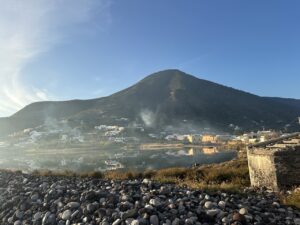
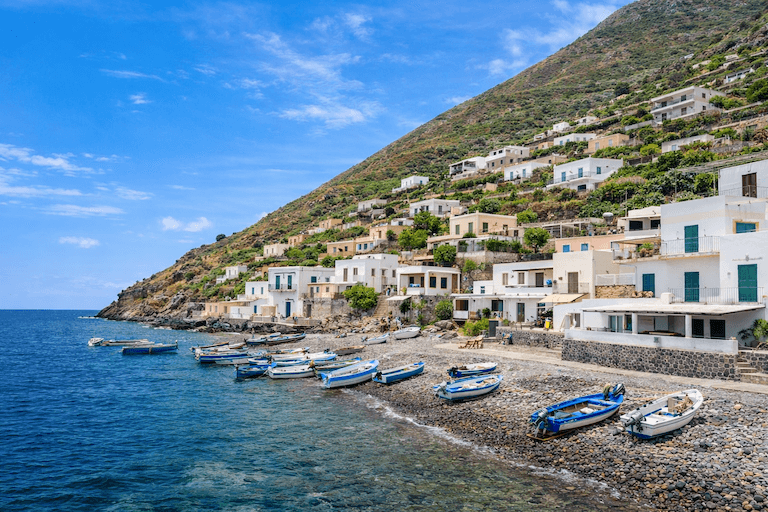
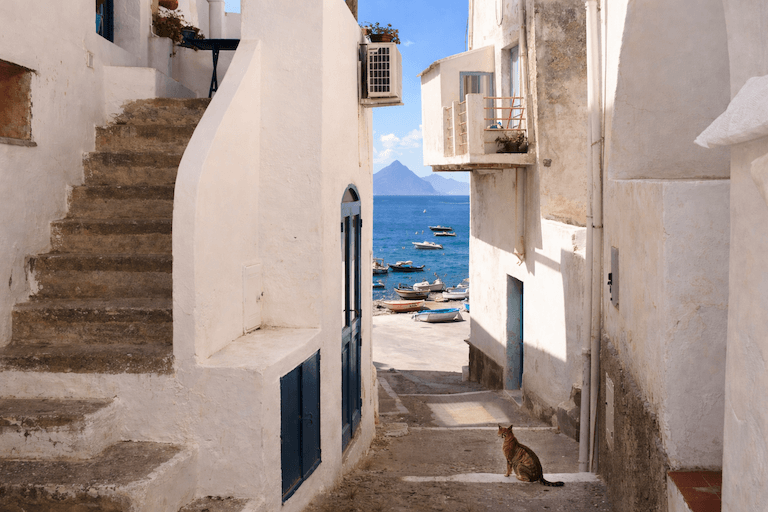
Alicudi rises steeply from the water. The entire island rises from a dormant volcano, and its character reflects that origin. Houses cling to the slope, scattered rather than clustered, connected by a web of stone staircases.
Alicudi Porto is the island’s only point of arrival at sea level and holds most of Alicudi’s shared services: a bar, a small grocery shop, a single hotel, the post office, which opens only a couple of days a week, and the island’s power station.
From the first moments you put your feet on the shore, expectations shift. Whatever pace you arrived with, whatever assumptions you carried about ease and efficiency, well…that’s a good moment to question them. Alicudi doesn’t meet you halfway. It waits for you to adapt.
Moving around Alicudi: Your legs…and donkeys!
There are no roads on Alicudi. No cars, no scooters. Movement happens on foot, up and down stone steps. This is where the donkeys come in.
Donkeys on Alicudi are not decorative or symbolic. They are working animals, essential to daily life. Donkeys carry groceries, materials, luggage, gas bottles, and anything else that needs to move uphill. They know the paths better than any visitor ever will.
When you meet a donkey on the stairs, you step aside. You wait. They have the right of way. This small interaction says a lot about Alicudi.
Walking changes how you understand distance. Places that look close on a map feel far once elevation is involved. Over time, movement becomes more intentional, less automatic. Your body adjusts, and, almost magically, your sense of time follows.
What to do on Alicudi (or not do 🙃)
Alicudi is not an island of activities. There are no organized excursions or packed schedules. What you do here emerges naturally from the landscape.
You walk. Then, you swim directly from the rocks into clear water. To rest, you sit in the shade and enjoy watching the light move across the sea. Boredom may appear at first, but it often softens into calm. Evenings are quiet. After sunset, darkness settles fully. Stars feel close. Conversations lower. Nights end early, not because there is nothing to do, but because sleeping with the rhythm of light feels natural.
There are minimal services on the island, with no pharmacies, banks, or ATMs, so it’s wise to bring cash and essentials with you. Alicudi also hosts a few local events:
- Ferragosto market at the port with local produce and crafts.
- Festa di San Bartolomeo on August 24, when residents carry a statue up the stone paths with songs and tradition.
Filicudi: A softer arrival
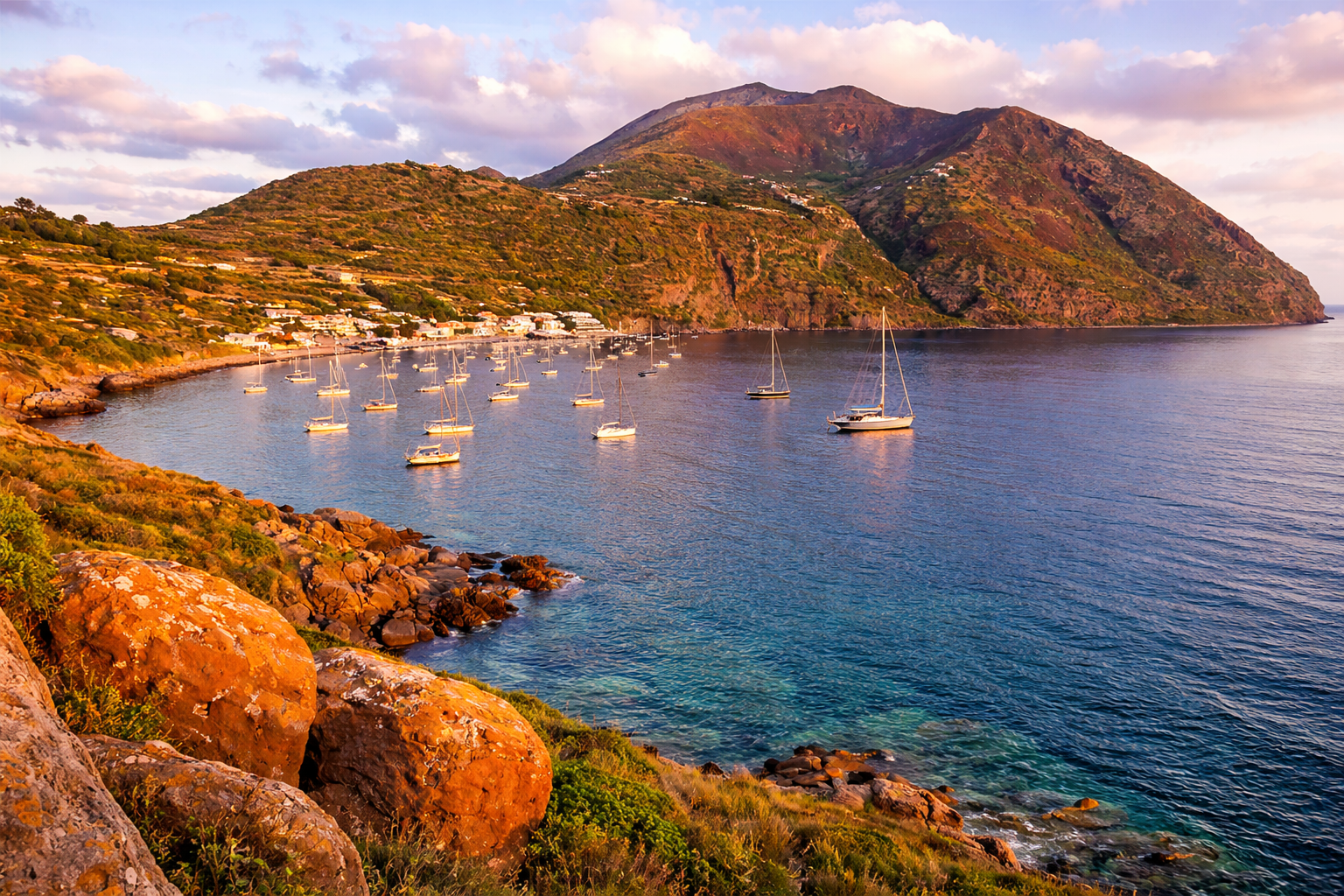
After Alicudi, arriving on Filicudi feels almost generous. The ferry enters Filicudi Porto, a small but defined harbor.
Filicudi has one main road that connects different parts of the island. Scooters are a common way to move around, especially for reaching places further from the port, but walking remains one of the best ways to understand the island’s scale.
One of the most lived-in parts of the island is Pecorini a Mare, a small fishing village facing the sea. It feels local, with a handful of houses and a few places to eat.
Boats play a central role. Many of Filicudi’s most memorable places are best reached from the sea, and a boat trip around the island reveals cliffs, coves, and swimming spots inaccessible by land.
What to see and do on Filicudi
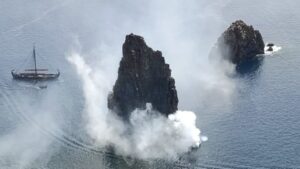
Filicudi offers more variety than Alicudi. One of the island’s most striking natural features is the Grotta del Bue Marino, a sea cave accessible only by boat. Entering it feels immersive and almost otherworldly, light bouncing off deep blue water, the echo of waves amplified by stone.
A boat tour around the island is one of the most rewarding ways to explore Filicudi. From the sea, you see how sharply the island rises, how little of it is accessible by land, and how deeply island life has always depended on boats. Swimming stops along the way feel spontaneous and private, pauses rather than destinations.
On land, Capo Graziano is an archaeological site that preserves the remains of a prehistoric village dating back thousands of years. Walking here creates a strong sense of continuity, people have been navigating isolation and connection on Filicudi long before ferries and schedules existed.
Back near the port, the small local museum provides context for the island’s past, displaying archaeological finds and objects tied to daily life.
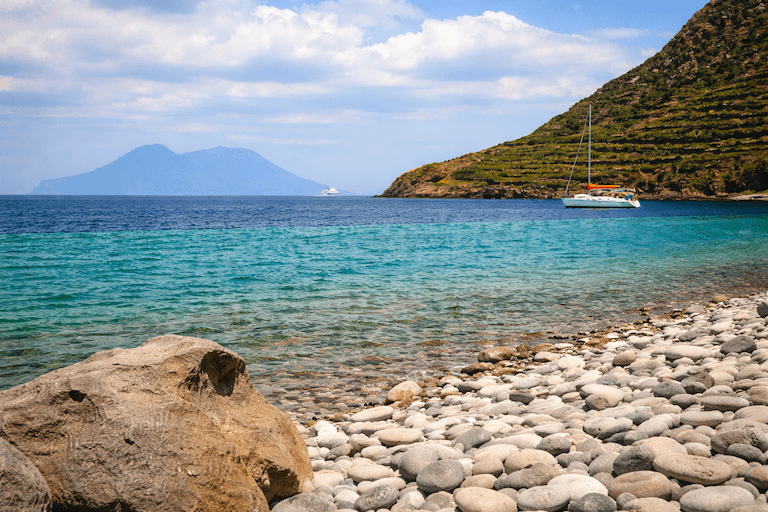
For swimming from land, spots like Le Punte and the shoreline near Pecorini a Mare offer clear water, volcanic rock, and a strong sense of place. As a reminder: Neither Alicudi nor Filicudi has sandy beaches. Swimming happens from rocks, platforms, or boats, with deep, clear water immediately beneath you.
This makes swimming intentional and often private. There is no competition for space, no background noise. You enter the sea, float, and leave when it feels right.
Alicudi vs Filicudi: Which one is right for you?
Alicudi suits travelers who are comfortable with limits, walking, and solitude. Filicudi suits those who want quiet with a little more choice.
Many travelers find the best experience comes from combining both. A shorter stay on Alicudi followed by more time on Filicudi creates balance.
What I love the most about these two unique places is that neither of these islands try to persuade you. They simply exist, at the edge of the map, offering a version of island life that hasn’t been softened for visitors. If you meet them on their terms, you’ll carry this trip as an unforgettable experience.
Practical tips
- Pack light, especially for Alicudi
- Bring cash
- Allow buffer days for ferries
- Wear good walking shoes
- Respect donkeys
- Expect limited connectivity
Planning your trip
If Alicudi and Filicudi are part of a longer journey, start with our planning your trip to the Aeolian Islands guide. It helps you choose islands, understand ferry routes, and build an itinerary that fits your travel style.
Frequently Asked Questions
Are Alicudi and Filicudi worth visiting?
Yes, for travelers seeking quiet, nature, and slow travel.
Which of the Aeolian Islands is more remote?
Alicudi.
How long should I stay?
2 nights on Alicudi, 3–4 on Filicudi is a good balance.
Are there sandy beaches?
No sandy beaches, only rocky access and deep water.
Are these islands suitable for families?
Yes, but more specifically for families comfortable with walking and limited services.